
Network Scale & Brand Integrity: How Dual-Grounding AI Protects Franchise Royalties and Trademark Licensing
I have to admit: I love food. My YouTube feed is filled with food reviewers and culinary content creators, and over the weekend, I always look forward to enjoying the meals I’ve been craving all week long.
Having observed this industry closely, I constantly ask myself: how can multi-unit food and beverage vendors—and franchise enterprises in general—deploy AI to its full economic potential to defend profit margins?
This challenge extends far beyond food and beverage. It applies equally to retail chains, service networks, and healthcare or beauty clinics (which frequently reminds me of my wife's weekend routines), where rapid geographic scaling relies heavily on the franchise and licensing model.
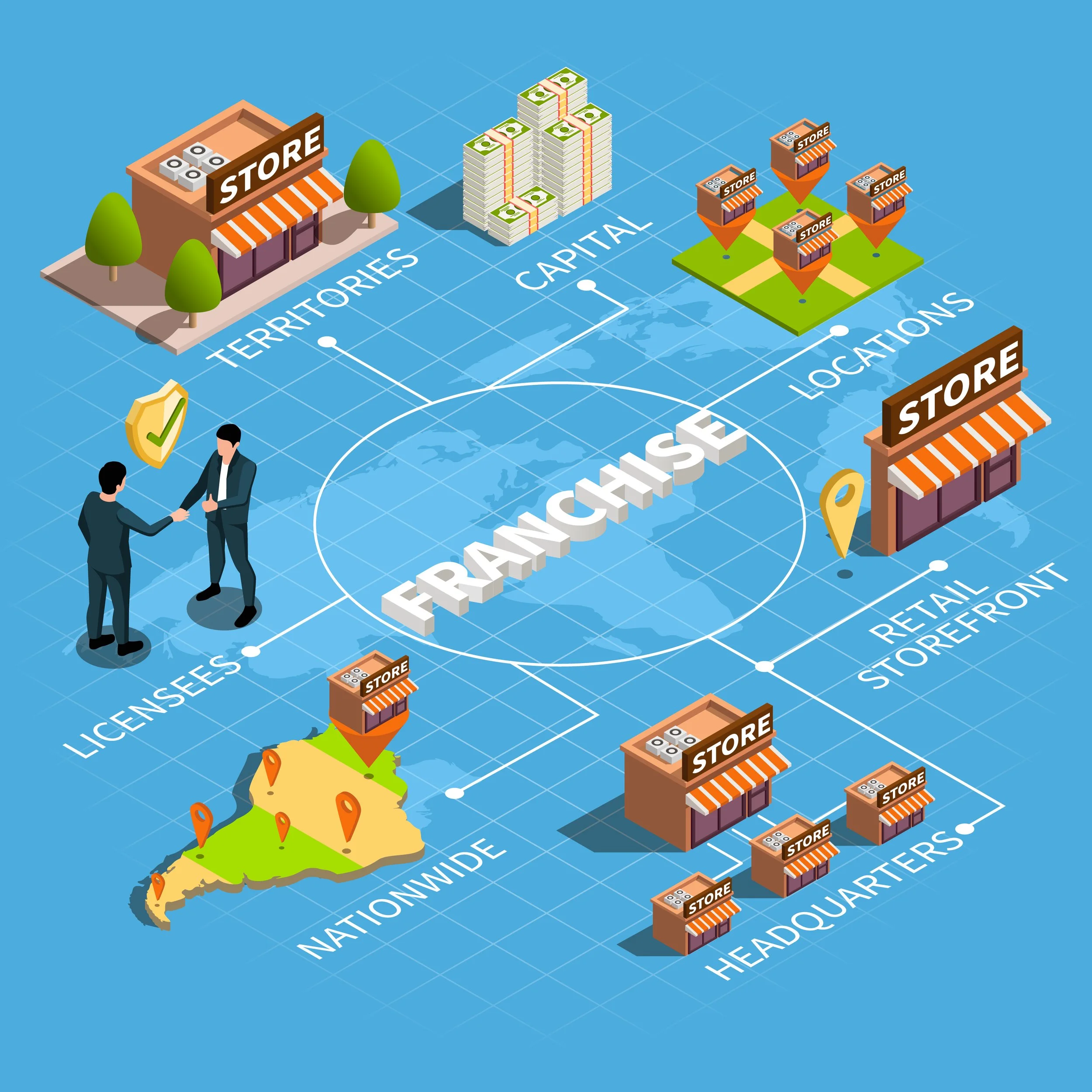
Under standard commercial franchise structures, a brand owner (the franchisor) licenses its proprietary operational system, recipes, and registered trademarks to independent operators (franchisees). In return, the franchisor generates revenue through two primary streams:
Ongoing Royalty Fees: A fixed percentage calculated directly from the franchisee's gross sales revenue.
Proprietary Supply Chain Margins: The mandatory distribution of core proprietary ingredients, branded packaging, and specialized equipment to ensure network uniformity.
However, as a franchise network scales across dozens or hundreds of decentralized regional locations, franchisors face a massive operational blind spot: revenue underreporting and unauthorized sourcing.
To lower their monthly royalty obligations and increase store-level margins, rogue franchisees frequently engage in off-book cash sales, manipulate electronic cash registers, or secretly source cheaper, non-standardized ingredients from unauthorized local suppliers.
The financial cost is severe: multi-unit franchisors routinely lose significant portions of their recurring royalty revenue, while substandard ingredient substitutions dilute customer trust and expose the trademark to catastrophic quality and regulatory liabilities.
The Information Disconnect: Field Inspectors vs. Point-of-Sale Realities
In most expanding franchise and retail enterprises, network governance is crippled by structural silos:
Franchise Operations & Field Auditors: Rely on periodic, scheduled physical site visits. Store operators easily conceal unauthorized inventory or adjust cash registers on inspection days, making manual audits largely symbolic.
Supply Chain & Central Logistics: Track bulk warehouse dispatches of branded packaging and proprietary ingredients, but lack automated mechanisms to cross-reference inventory consumption against the franchisee's reported daily sales.
In-House Legal Counsel: Draft comprehensive Master Franchise Agreements containing strict audit, quality control, and termination clauses, but lack contemporaneous, objective data to prove underreporting or breach of contract before a dispute escalates into contested litigation.
When an enterprise lacks continuous synchronization between store-level sales data and central supply chain inventory, franchise audits remain purely reactive, allowing royalty leakage to drain the franchisor's balance sheet for months.
The Dual-Grounding Solution: Architectural Blueprint
To transform franchise auditing into an automated, predictive governance system, I believe, forward-thinking franchisors should deploy a governed dual-grounding pipeline built upon three integrated layers:
1. The Central Operational & Recipe Baseline Layer
The pipeline is grounded in the franchisor’s proprietary operating standards through private retrieval-augmented generation. It maintains real-time visibility over master franchise agreements, approved supplier directories, royalty fee schedules, and standard operational recipe consumption ratios (for example, the exact weight of proprietary seasoning, packaging cups, or base ingredients mathematically required per menu transaction).
2. Live Multi-Channel Point-of-Sale Ingestion Layer
The pipeline connects directly to live point-of-sale (POS) transaction feeds, third-party delivery platform integration streams, and warehouse replenishment order logs across every licensed outlet via authorized B2B data connections.
3. The Anomaly Detection & Royalty Audit Engine
The system does not rely on subjective inspection reports. It continuously calculates the mathematical correlation between raw material replenishment orders and reported sales turnover, instantly flagging material balance discrepancies where consumption patterns do not match reported revenue.
Operational Scenarios: Franchise Governance in Action
Scenario A: Detecting Unreported Sales via Packaging Reconciliation
Outlet Operational State: A high-traffic franchise outlet in a prime commercial district reports a twenty-five percent decline in gross sales over a three-month period, resulting in significantly lower royalty payments to the franchisor.
Supply Chain Ingestion: The dual-grounding pipeline cross-references the franchisee's central packaging orders, discovering that the outlet continuously orders five thousand units of proprietary branded takeaway boxes and cups every month.
The AI Directive: Analyzes the mathematical consumption ratio: five thousand packaging units ordered versus only one thousand five hundred reported meal sales on the POS register. The system compiles a contemporaneous anomaly dossier demonstrating an estimated three thousand five hundred off-book cash transactions, providing legal and operational teams with indisputable evidence to issue a formal audit demand and recover unpaid royalties.
Scenario B: Flagging Unauthorized Supplier Substitution
Outlet Operational State: A licensed beverage outlet reports steady gross sales, but central warehouse records show that the outlet has not ordered proprietary flavor syrups or packaging from the authorized master distributor for sixty consecutive days.
Autonomous Intelligence Action: The pipeline cross-references daily POS transaction categories against central distribution dispatches, flagging that the outlet is actively selling specialized beverages without corresponding proprietary ingredient purchases.
The AI Directive: Automatically generates an operational breach notice to the regional franchise manager specifying unauthorized local ingredient sourcing, preventing trademark dilution and enforcing contractual quality standards before customer quality complaints emerge.
The Manual Reality: Why Traditional Excel Audits Fail
At this point, franchise executives often object: "Wait—we already cross-check store sales against warehouse inventory manually at the end of the month."
Exactly. And that delay is precisely where the financial leakage occurs.
Consider how manual reconciliation works in practice: an accountant in head office spends up to three hours manually matching Excel spreadsheets for a single store. When an enterprise operates dozens of outlets across multiple locations, that manual audit scales into tens of thousands of individual line items.
By the time an internal audit clerk finally discovers a discrepancy in an Excel sheet, forty-five to sixty days have already passed. The unauthorized inventory has been consumed, the off-book cash has been pocketed, and the franchisor has lost two months of royalty revenue.
AI does not invent a new accounting concept. Reconciliation has always been standard business practice. What AI introduces is superhuman speed and continuous scale—auditing one hundred percent of branch transactions every single night in seconds, while comparing multi-outlet performance and adjusting dynamic supply chain replenishment automatically.
The Legal Bridge: Transforming Data Anomalies into Defensible Contract Enforcement
However, catching an inventory discrepancy on a dashboard is only half the battle.
If a franchisor cannot transform digital anomaly logs into legally admissible evidence, issuing a store audit, demanding back-royalties, or terminating a rogue franchisee will quickly devolve into messy, protracted litigation.
Deploying automated data reconciliation across a franchise network requires aligning digital intelligence directly with core commercial and intellectual property law:
1. Trademark Licensing and Mandatory Quality Control
Under international and regional intellectual property jurisprudence, a trademark licensor possesses not only the right, but an active legal duty to exercise continuous quality control over licensed operations. Allowing rogue franchisees to substitute unauthorized, substandard ingredients dilutes brand equity and can legally jeopardize trademark enforceability. Automated supply chain tracking provides franchisors with the continuous documentation necessary to prove active, diligent trademark supervision.
2. Evidentiary Weight in Royalty Audit Demands
In commercial disputes involving revenue underreporting, franchisors frequently struggle to prove the exact quantum of unrecorded cash sales. Reconciling proprietary ingredient and packaging consumption against reported sales turnover provides objective, mathematically defensible evidence. This allows legal counsel to enforce contractual audit clauses, substantiate back-royalty claims, and recover full inspection costs without relying on speculative estimates.
3. Defensible Termination and Post-Term Restraints
When a franchisor must terminate a non-compliant operator, the termination must be legally supported to prevent counterclaims of wrongful contract cancellation or unlawful commercial interference. Contemporaneous data dossiers proving unauthorized sourcing or deliberate revenue concealment provide incontrovertible grounds for immediate agreement termination, enforcing post-termination non-compete covenants and removing brand signage safely.
Summary: Scaling Brand Value with Operational Integrity
In multi-unit franchise expansion, real enterprise value is not measured solely by the total number of outlet openings. it is determined by the integrity of recurring royalty revenue and uniform brand standards.
A franchisor relying on manual, periodic spot-audits will continuously leak profit margins and brand equity to rogue operators. By combining centralized recipe baselines, live point-of-sale data streams, and rigorous trademark licensing guardrails, brand owners can scale aggressively across regional markets while ensuring that every licensed outlet operates transparently, profitably, and in strict compliance with the brand's legal and quality standards.
